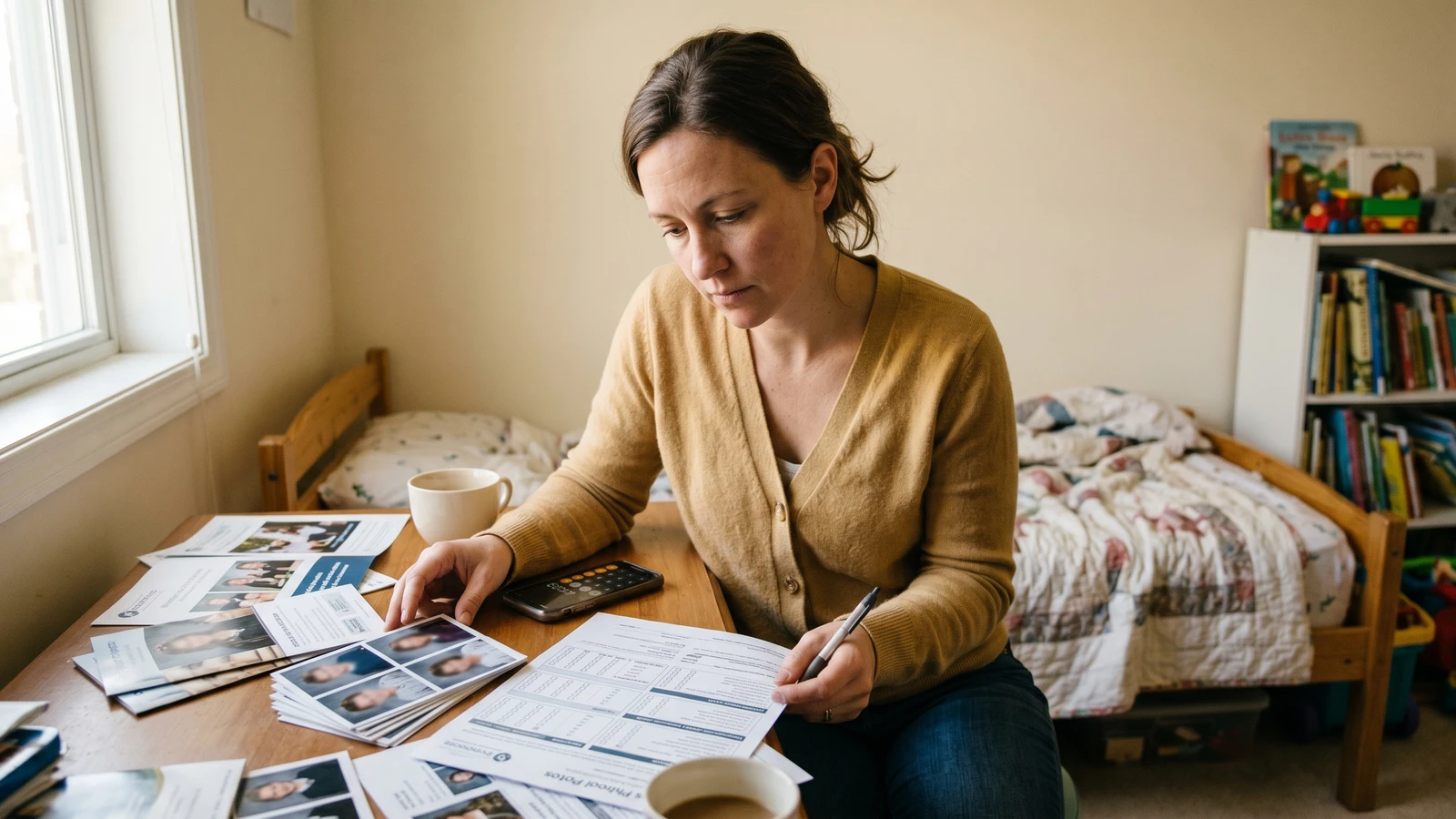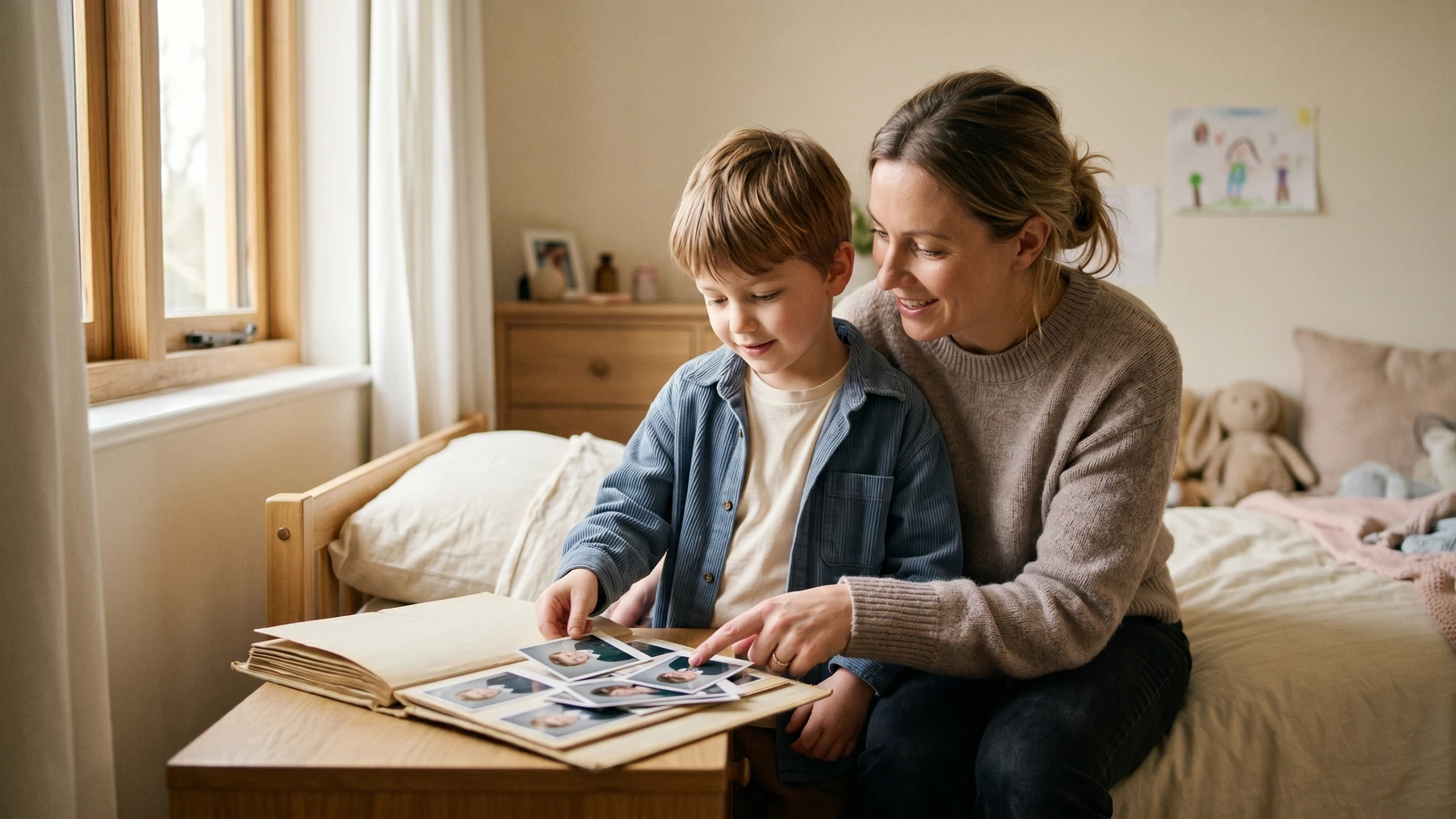
Picture day pressure is exactly how kids end up with the stiff, panicked smile parents hate. The fix is not better posing. It is lower stakes. When children feel like the photo is a test, they tighten their jaw, widen their eyes, and try to "do it right." When they feel safe and unhurried, you usually get something that actually looks like them.
Quick answer
- Stop coaching for a "big smile" the morning of picture day.
- Give your child one simple job: look at the camera and think about something they like.
- Practice a relaxed face for 20 to 30 seconds the night before, not a long mirror session.
- Treat a soft smile or even a calm neutral expression as success.
What to say the night before
Keep the conversation casual. Instead of saying, "You need to smile nicely tomorrow," say something closer to, "They'll take a quick picture at school, and then you're done."
That sounds small, but it matters. Many kids tense up because adults frame picture day like a performance. A low-pressure script helps them understand that this is just one short part of the school day, not an event they can fail.
If your child asks what they should do, give them one concrete instruction: "Look at the camera like you're saying hi to a friend." That is easier for most kids than "smile naturally," which is too abstract.
What actually works the morning of
Skip the repeated reminders. The more often a child hears "don't forget to smile," the more self-conscious they become.
What works better:
- make sure they are comfortable in their clothes
- offer water before school if they tend to get dry lips or a tight mouth
- give them a funny or familiar thing to think about
- remind them they do not need to show teeth unless they want to
What to avoid
Three things usually backfire:
- Mirror practice for more than a few seconds.
- Promises or bribes tied to smiling.
- Correcting their face in the car on the way to school.
When a neutral face is completely fine
Parents sometimes assume the only successful school portrait is a broad grin. That is not true. If your child is calm, looks like themselves, and does not seem distressed, that is a usable photo. A soft smile or serious face often feels more real than a forced grin.
This matters even more for camera-shy kids. If they are uncomfortable, aim for relaxed, not bubbly.
When this advice changes
- If your child has sensory sensitivities, talk to the school first about how the photo setup works.
- If glasses, collars, or hair accessories bother them, solve the comfort issue before worrying about expression.
- If your child is going through a hard season, lower the bar. A peaceful photo is better than a perfect one.
FAQ
What if my child refuses to smile at all? That is okay. A calm expression is better than a forced one.
Should I practice with selfies? Briefly, yes, if it stays silly and low pressure. Stop before it turns into coaching.
Does telling them to say cheese help? Usually no. It creates the exact stiff mouth shape most parents are trying to avoid.
What if the photographer rushes them? Prepare your child for a quick session ahead of time and keep your expectations realistic. School-photo setups move fast.
Sources
- Child Mind Institute, guidance on reducing performance pressure in children: https://childmind.org/
- HealthyChildren.org from the American Academy of Pediatrics, social-emotional support guidance: https://www.healthychildren.org/
Meet the author
Joanne Carter
Parent Columnist · A Parent in the Trenches
Parenting essays from the middle of the mess — dignified, unperformative, and quietly funny
Joanne writes about parenting from inside it, not above it. Her column at SmilePlease focuses on the small, practical decisions that decide how a morning goes — the shirt, the breakfast, the ten-second debate over hair — and on the larger, quieter question of how parents stay calm when the day is already running long.