Mode: Focused Instructional Target length: 700 words Why this mode fits: The prompt requires practical, actionable advice delivered through the specific lens of technical literacy and data ethics, which necessitates a balance between instructional steps and conceptual framing.
Direct Answer
Preparing your child for picture day involves two distinct workflows: the physical preparation of the child and the digital preparation of the data. Parents should focus on the "knowns" of the session—the photographer’s equipment and the school’s vendor contract—rather than the "unknowns" of automated post-processing. Practically, this means confirming whether the school uses proprietary AI for facial retouching or traditional manual editing, and opting out of "auto-enhancement" features if you prefer to retain the child’s natural features. Your preparation should prioritize establishing a clear boundary for how much biometric data (your child's face) is processed by third-party vendors and stored in school administrative databases.Quick Answer: Your Preparation Checklist
* Verify the vendor: Check your school’s communications for the name of the photography company. * Request the Privacy Policy: Locate the specific "data retention" or "AI processing" section in the vendor's policy. * Opt-out of "Auto-Retouching": If the vendor offers AI-based facial smoothing or feature adjustment, you generally have the right to request a "raw" or "manually edited" file. * Clarify Data Deletion: Ask how long the vendor stores your child’s raw biometric data after the print order is fulfilled. * Manage the Physical Prep: Focus on simple comfort—avoiding restrictive clothing or complex patterns—to ensure the child feels at ease, which reduces the need for the vendor to "fix" expressions later.Understanding the "Enhancement" Pipeline
When we talk about "picture day," we aren't just talking about a camera and a backdrop. We are talking about an image-processing pipeline. Many modern school photography vendors now utilize machine learning (ML) models to perform tasks like teeth whitening, skin smoothing, or eye brightening.As a consumer, you should understand that these are probabilistic processes. An AI does not "know" your child; it applies an average—a statistical model of what a "perfect" school photo should look like—over your child’s actual features. If you are uncomfortable with an algorithm altering your child’s likeness, the most effective preparation is to request that your child’s image be processed without these automated "enhancement" tools.
The Data Lifecycle
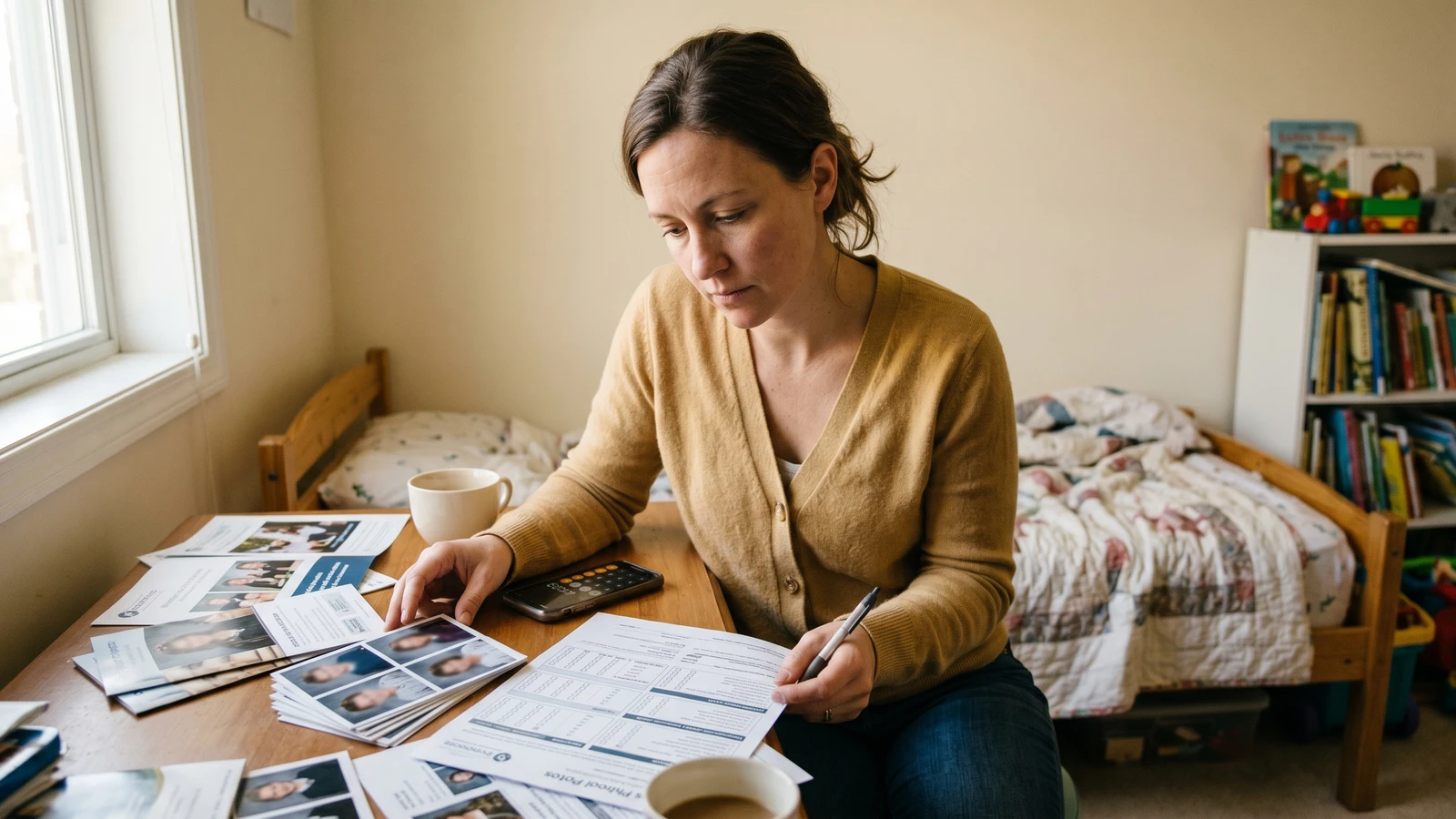
Beyond the aesthetic, you are participating in a data transaction. When you sign a photo release or consent form, you are typically granting a vendor a license to store your child’s biometric data.Ask these three questions of the school administration before the camera shutter clicks:
- Who is the sub-processor? Some photography firms outsource their cloud storage or AI-editing to third-party tech firms. Know who they are.
- What is the retention window? The data should ideally be deleted after the final order is delivered and the contract period ends.
- Is the data air-gapped? Ensure that the school portal used for viewing proofs is not connected to the vendor’s wider "public" marketing database.
When this doesn't apply
* Public Event Photos: If your child is part of a large group or "crowd" photo, individual consent and privacy-centric opt-outs are generally not applicable under current FERPA (Family Educational Rights and Privacy Act) interpretations. * Contractual Necessity: If the school has a sole-source contract that prohibits manual editing, you may be forced to choose between participating in the ecosystem or declining the photo service entirely. * Legal Compliance: In some jurisdictions, biometric consent is superseded by state-mandated records-keeping requirements for school identification cards.FAQ
Can I stop the school from using AI on my child's photos? Yes, by contacting the vendor directly and specifying that you opt-out of "automated retouching services" or "AI-enhanced processing."
What happens to my child's data after I buy the prints? Most vendors have a retention policy. Review their terms of service to see if they hold the high-resolution image file for "internal training" or "archival" purposes.
Should I worry about deepfakes? The current risk isn't necessarily deepfakes, but the proliferation of your child's high-resolution biometric data. Limit your exposure by only uploading photos to the official vendor portal and nowhere else.
Does SmilePlease handle data differently? SmilePlease uses encrypted, ephemeral storage for its processing pipeline; we do not utilize third-party sub-processors for facial recognition or automated generative "enhancements" that alter a subject's core features.
Sources
FERPA General Guidance for Parents:* U.S. Department of Education Biometric Information Privacy Act (BIPA) basics:* ACLU Privacy Analysis Understanding AI in Image Processing:* NIST AI Risk Management FrameworkAlternate Titles
- Beyond the Backdrop: A Privacy Guide to School Picture Day
- How to Opt-Out of AI Retouching for Your Child’s Photos
- The Data Ethics of School Portraits: What Parents Need to Know
Alternate Subtitles
- Practical steps to protect your child’s biometric data from automated processing.
- Navigating the technical pipeline behind modern school photography.
Meet the author
Ari Singh
Tech & Ethics Columnist
Plain-language writing about how AI tools work, what they collect, and where the lines are
Ari writes about the technology behind modern photo tools — how AI-generated portraits actually work, what data the pipeline sees, what it retains, and where the ethical decisions sit. Their column at SmilePlease is written for parents who want real answers without becoming ML engineers.